-
1st Floor, No.89 Maqian Road, Sanxiang Town, Zhongshan City

Is a Composite Granite Sink Better Than a Stainless Steel Sink
If you sell or specify sinks every day, you’ve probably been asked this question a hundred times: is a composite granite sink really better than a stainless steel sink?
Short answer: it depends what you care about and what your projects need. Let’s walk through it in a simple, real-world way, but still with enough “hard data” that you can talk to your clients with confidence.
At SUSINKS, a top stainless steel sink manufacturer in China, we see both materials in the market every season. Many of your customers like the stone look of composite, but still end up bulk-buying stainless steel because of durability, cost control and SKU flexibility.
Table of Contents
What Is a Composite Granite Sink?
A composite granite sink is usually made from crushed stone (granite or quartz sand) mixed with resin. The surface is:
- Matte, stone-like, not shiny
- Available in colors like black, grey, beige and white
- Non-porous, so it resists stains and bacteria quite well
From a project view, composite granite is a good fit when:
- The kitchen design focuses on a stone aesthetic
- The customer wants the sink to blend with quartz or granite countertops
- Noise level in the sink area is a key selling point
But it’s heavy. It also can chip or crack if someone drop a very heavy pot on the edge. For B2B buyers, that means you must think about claim rate and after-sales cost, not only showroom look.
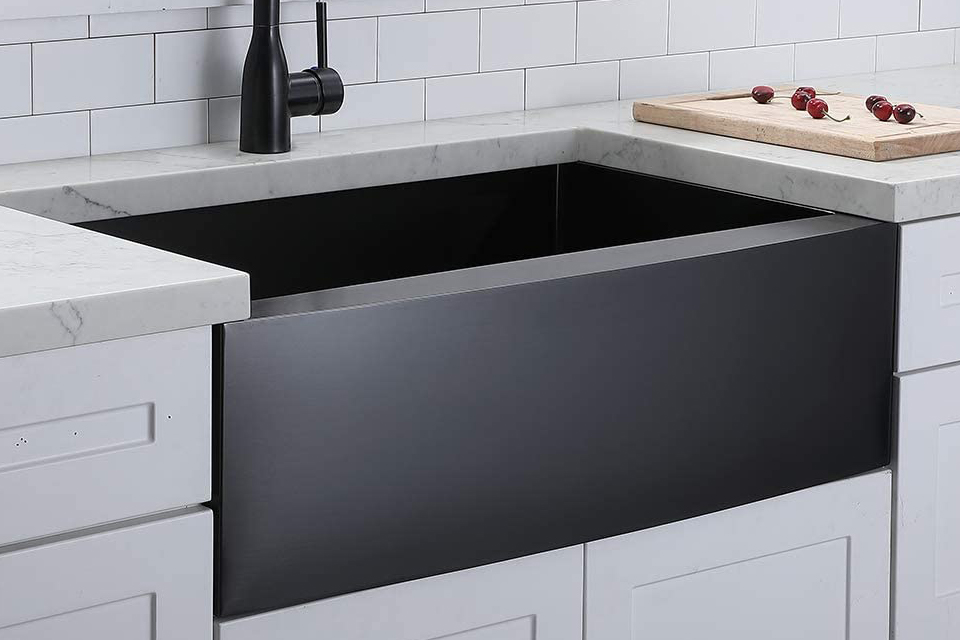
What Is a Stainless Steel Kitchen Sink?
A stainless steel sink is made from a steel alloy with chromium to prevent rust. Common gauges are 16, 18, 20 and 22. Lower gauge means thicker steel, better feel, less noise.
Stainless steel sinks are popular because they:
- Match most appliances and hardware
- Work in modern, minimal and even traditional kitchens
- Are lighter and easier to install and transport
- Handle hot pots and daily abuse without cracking
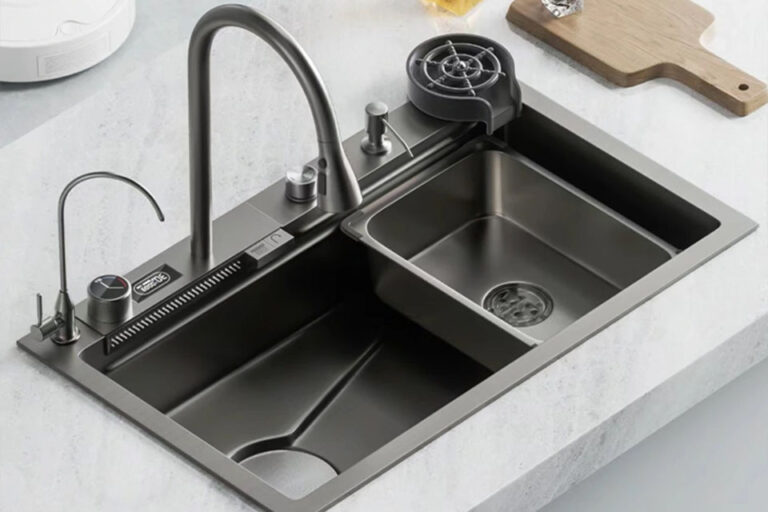
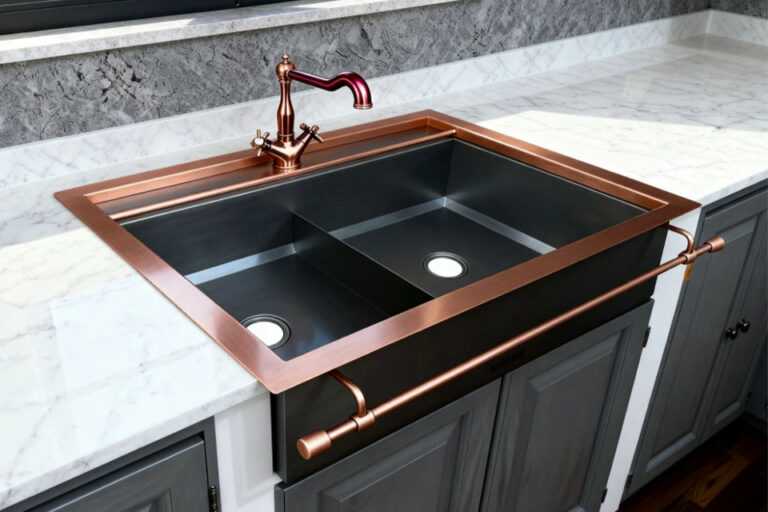
On our side, we offer many layouts, from single bowl undermount stainless steel kitchen sink to double bowl stainless steel kitchen sink factory models for OEM projects. Stainless gives you a big SKU playground.
Composite Granite Sink vs Stainless Steel Sink: Key Comparison
Here is a simple table you can show to clients or internal buyers when they ask for a quick comperation.
| Criteria | Composite Granite Sink | Stainless Steel Sink |
|---|---|---|
| Look and style | Matte, stone-like, colored surface | Brushed or polished metallic look, easy to match appliances |
| Durability | Very scratch-resistant, but can chip or crack on heavy impact | May scratch or dent, but almost never cracks |
| Heat performance | Handles hot water, not ideal for red-hot pans parked directly | Excellent with heat, hot pots are normally no problem |
| Stain and hygiene | Non-porous, good at hiding stains and water marks | Also non-porous, but shows fingerprints and spots more |
| Noise level | Naturally quiet | Needs thicker gauge and sound pads to reduce noise |
| Weight and cabinet load | Heavy; requires strong cabinets and careful installation | Lightweight; easier for installers and retrofit projects |
| Maintenance routine | Needs gentle cleaners, avoid harsh chemicals | Easy to clean; more tolerant, but you wipe more often for nice look |
| Typical use in projects | High-end residential, design-driven kitchens | Mass projects, rental units, spec homes, hospitality, RV and multi-family |
| Flexibility for OEM / ODM SKUs | Fewer shapes and sizes, tooling more complex | Very flexible on size, radius, bowl layout, accessories and custom branding |
You can still add extra rows when you localize this table for specific markets or channel.
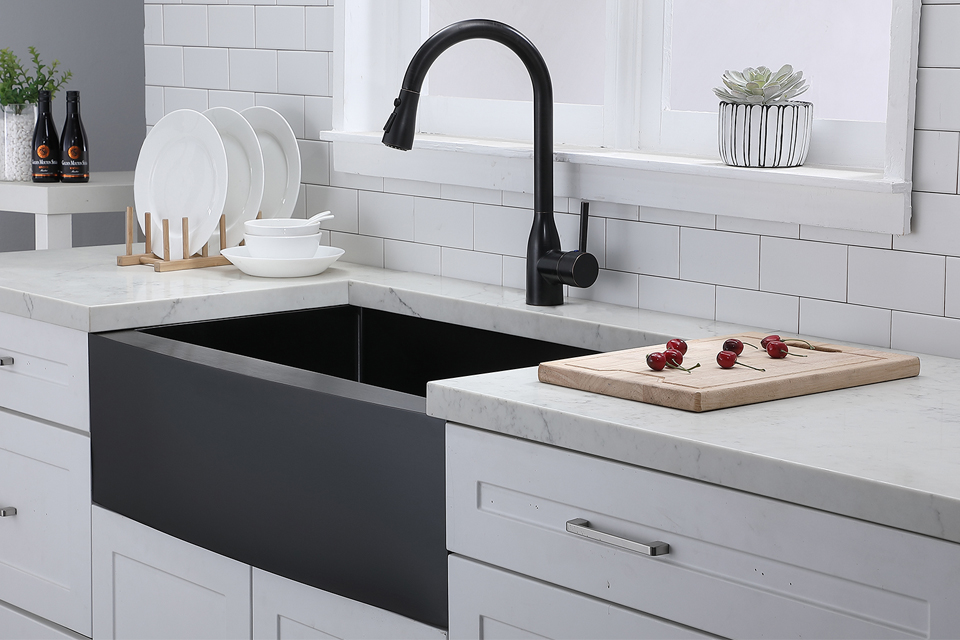
Durability and Impact Resistance in Real Projects
In real kitchens, people don’t treat the sink gently. Heavy pots, cast-iron pans, glass bottles, everything goes into that bowl.
- Composite granite feels very solid and resists day-to-day scratching from cutlery and pans.
- However, if a customer drops a pot straight on the corner, there is a risk of a chip or hairline crack. One bad hit can become an after-sales ticket.
- Stainless steel shows more surface wear: swirl marks, fine scratches. But the bowl itself almost never fails. It dents before it dies.
For B2B buyers, this matters. A little scratch is a cosmetic issue. A cracked bowl is a replacement. Many retailers and platform sellers prefer stainless steel because it keeps the claim rate lower over big volumes.
If you target premium villa projects with close designer support, composite granite is still okay. If you ship pallets to different cities and don’t control end-user behavior, stainless is generally safer.
Heat, Stain and Cleaning Performance
Heat and stain performance of composite granite sinks
Composite granite sinks:
- Handle daily hot water and normal cooking temps
- Don’t like direct contact with super hot pans just out of the oven
- Hide stains well thanks to the matte, colored surface
For your install teams, that means you should educate end users a bit: “don’t park the red-hot pot in the dry sink.” In B2B channels, this kind of small tip can reduce complaints a lot.
Heat and stain performance of stainless steel sinks
Stainless steel sinks:
- Are basically heat-proof for domestic kitchens
- Can discolor slightly with harsh chemicals, but won’t burn or crack
- Show water spots, especially in hard water areas
Cleaning is simple: mild detergent, soft cloth, sometimes baking soda. For example, our topmount stainless steel single bowl sink wholesale models are designed so end users can keep them clean fast, without special chemistry.
From a buyer’s angle, both materials are hygienic. Stainless just requires more frequent wipe-down to look “new” on photos and in showrooms.
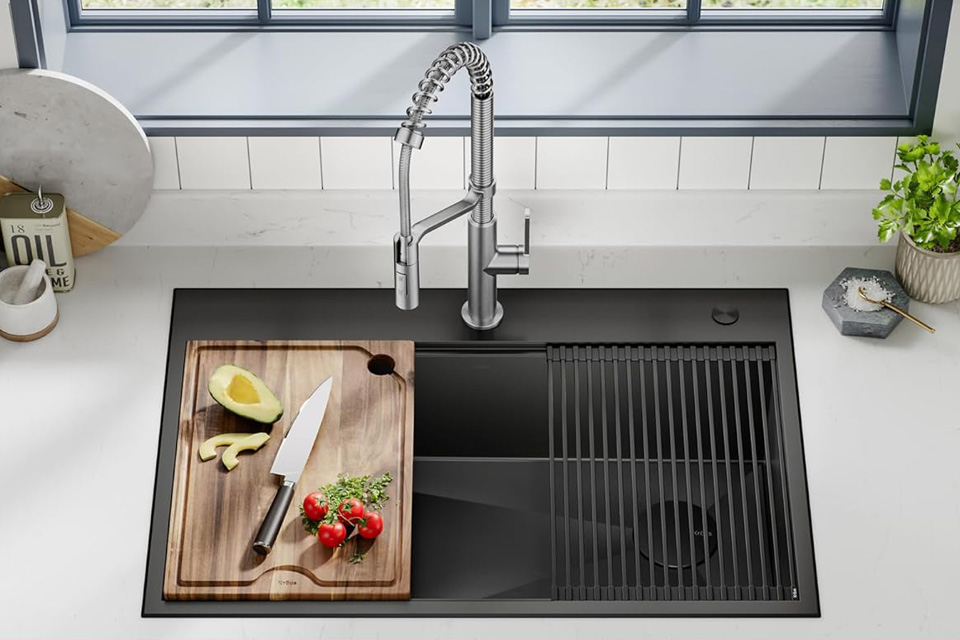
Noise Level, Weight and Installation
Noise and weight are classic pain points in kitchen projects.
- Composite granite sinks are quiet by nature. Water noise and dish sound is low, which some clients love, especially in open-plan kitchens.
- But the heavy weight means installers must handle carefully. Old cabinets or weak carcass design may need reinforcement.
Stainless steel:
- Can be noisy if the steel is thin and there is no sound pad.
- But with 16 or 18 gauge plus under-bowl pads, noise is much lower and acceptable for most buyers.
- Is light, so installers like it. Less risk of damage during handling, easier for high-floor apartments with no elevators.
For example, a double basin topmount stainless steel kitchen sink gives you good capacity but still friendly for quick replacement jobs. Your fit-out partners will thank you for that.
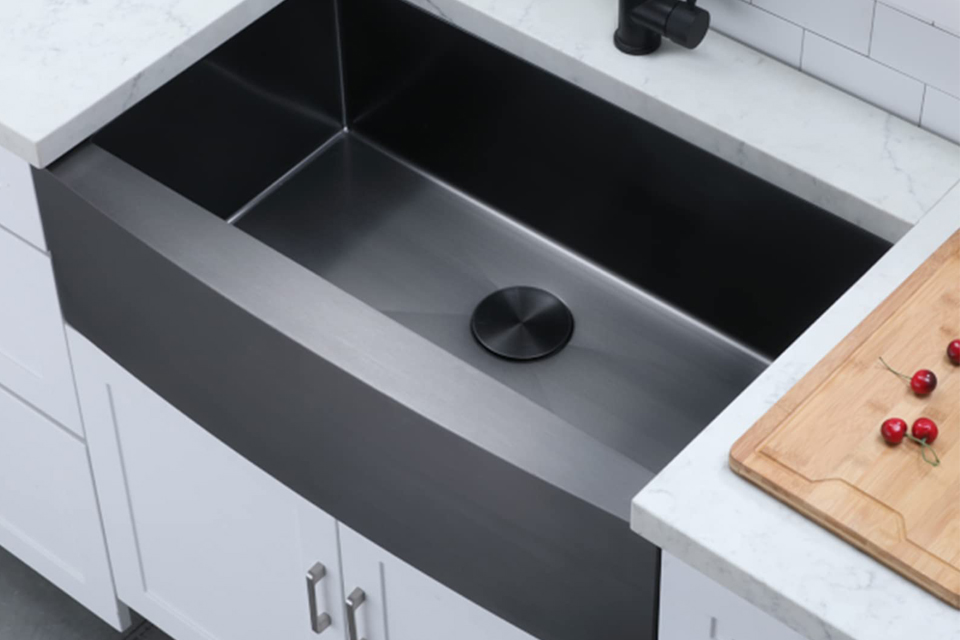
Which Sink Material Fits Your Business Scenarios?
Let’s match the material with typical B2B scenarios.
When to choose composite granite sinks
Composite granite works best if:
- You focus on high-end kitchen studios and showrooms
- The designer leads the decision and wants a stone story from countertop to sink
- Order quantity per project is small, but unit price is higher
Here the sink is part of a full design package, not a stand-alone SKU. You sell more “look and feel” than lifetime toughness.
When stainless steel sinks are the better choice
Stainless steel shines when you:
- Serve retailers, platform sellers, distributors and trading companies
- Need stable quality across many batches and mixed containers
- Care about easy stock rotation and clear spec (gauge, size, finish)
- Work on multi-family, hotel, RV or commercial kitchens
In this case, stainless steel is more forgiving. A single bowl 20 gauge stainless steel drop-in kitchen sink can fit budget projects, while a nano black 16 gauge stainless steel single bowl kitchen sink gives you a more premium SKU for upsell.
You cover different price bands and user profiles without changing material family.
How SUSINKS Supports Your Stainless Steel Sink Projects
SUSINKS focuses on stainless steel sinks and faucets, with OEM and ODM service for global buyers. That means we don’t just sell one-off models. We help you build a sink line that match your brand and sales channels.
You can work with us to:
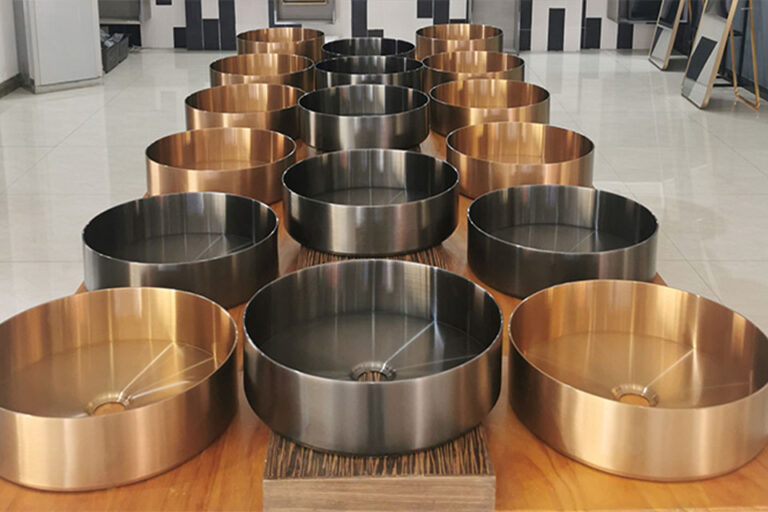
- Customize size, gauge, bowl layout and accessories
- Develop exclusive designs for certain regions or platforms
- Adjust details like radius corner, ledge system and workstation kits
- Plan SKUs from entry level to high-end, for better attach rate per kitchen order
For example, you might combine:
- A wholesale single bowl stainless steel farmhouse kitchen sink as your hero product
- Several quality stainless steel undermount bar sinks for upsell and add-on orders
- A mix of custom stainless steel undermount sinks for project business
This way, you control brand image, cost structure and logistics with one material system. Granite composite can still appear as a design option in your catalog, but stainless becomes your stable volume engine.
So, Is a Composite Granite Sink Better Than a Stainless Steel Sink?
If a client asks “which one is better,” you can answer like this:
- For pure design and quiet use, composite granite looks amazing and feels very solid.
- For long-term reliability, flexible SKUs, easier installation and large-volume business, stainless steel is usually the smarter pick.
Most of our partners end up using stainless steel as the main line, and then adding a few composite granite models as design pieces. You don’t have to choose only one material forever. But if you want one workhorse sink for OEM/ODM, bulk orders and platform listing, stainless steel is still the more balanced choice.
And of course, if you need a manufacturer who understands both the engineering talk and the e-commerce pain points, SUSINKS team is always open to discuss your next sink program.

Stainless Steel Sinks Manufacturer
Leading Chinese stainless steel sink maker for kitchen, bathroom, bar and RV; premium single & double bowls, OEM/ODM services for clients and brands worldwide!
Quick Links
Products
Contact
© 2025 China Kitchen Sink | Stainless Steel Sinks Manufacturer