-
1st Floor, No.89 Maqian Road, Sanxiang Town, Zhongshan City

The Best Ways to How to Clean a Stainless Steel Sink
You want a shiny sink without baby-sitting it all day. Good news: stainless steel cleans fast if you use the right steps, mild products, and grain-friendly tools. Below is a simple routine you can actually follow, plus pro tips for hard water, stains, and busy homes or rental units. I’ll also show where a little “ops thinking” helps if you manage multiple units or order sinks in bulk.
Table of Contents
Stainless Steel Sink Cleaning: Step-By-Step Routine
- Rinse and soap Run warm water. Add a drop of dish soap to a soft sponge or microfiber. Wipe with the grain to lift grease and food film. Rinse. Dry with a towel. This alone solves 70% of messes.
- Deodorize and lift grime Dust a light layer of baking soda. Gently scrub (non-scratch pad). Rinse well. Dry. It’s mild, safe, and works great for day-to-day smells.
- Remove hard water stains Spray white vinegar on spots around the drain and faucet base. Let it sit for 1–2 minutes. Wipe with microfiber along the grain. Rinse, then dry. Don’t mix vinegar and bleach—ever.
- Treat stains or rust specks Use an oxalic-acid cleanser (like a stainless-safe powder). Wet the surface, apply a small amount, rub softly with the grain, rinse very well, and dry. Don’t let the cleanser dry on the steel.
- Finish and protect Add a tiny drop of mineral oil or a stainless polish. Buff with microfiber. It hides fingerprints and helps water bead off. Go light—too much oil looks greasy.
This routine is quick, safe for 304 steel, and doesn’t dull the finish. Follow the grain, keep tools soft, and always dry at the end. Yes, drying sounds boring, but it prevents spots and that cloudy look.
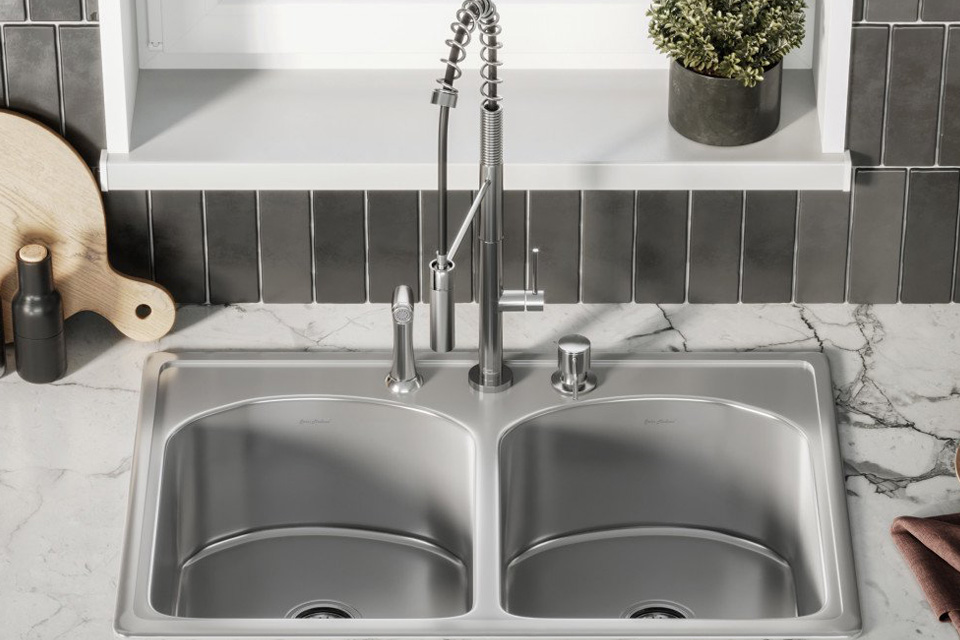
Kitchen Sink Cleaning Products: What To Use
Best cleaning products for stainless steel sinks
- Mild dish soap + warm water
- Baking soda (gentle abrasive)
- White vinegar (for mineral deposits)
- Stainless-safe powder/cream with oxalic acid (for stains)
- Microfiber cloths and non-scratch pads
Avoid these on a stainless steel sink
- Steel wool and metal scouring pads (they scratch, then rust spots appear)
- Harsh abrasives and undiluted bleach
- Leaving rubber mats sitting wet in the basin (traps moisture)
- Scrubbing across the grain (causes visible swirls)
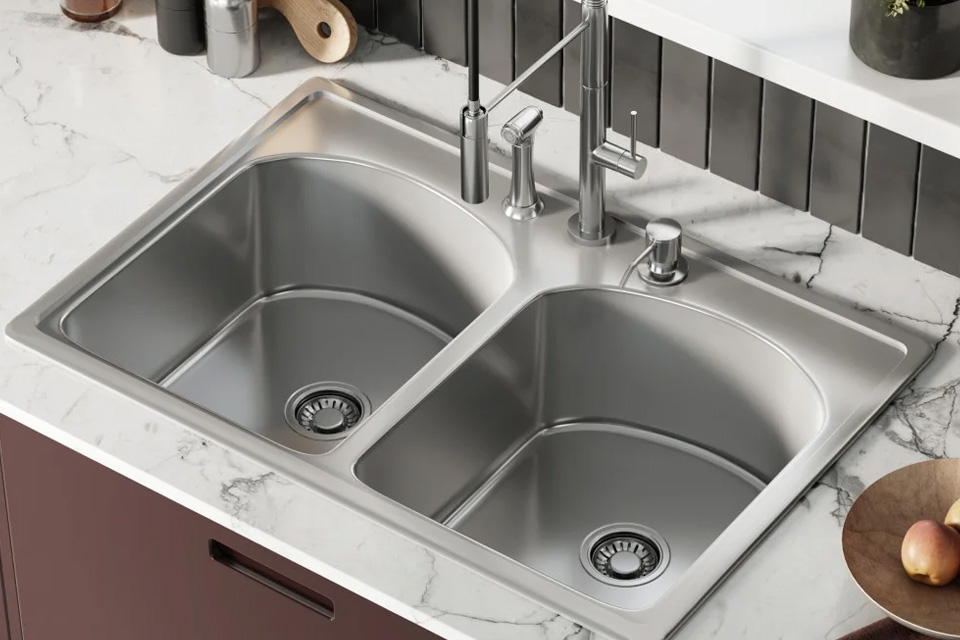
Data Table: Methods, Use Cases, Dwell Time, Risk Level
| Method | Best For | Typical Dwell Time | Scratch Risk | Notes |
|---|---|---|---|---|
| Dish soap + warm water | Grease, daily food film | 0–1 min | Low | Always wipe with the grain, rinse, dry |
| Baking soda + non-scratch pad | Odors, light grime | 0–2 min | Low | Gentle pressure only, rinse completely |
| White vinegar (spot use) | Hard-water spots, limescale | 1–2 min | Low | Don’t mix with bleach, rinse, dry |
| Oxalic-acid cleanser | Rust specks, tea stains | 1–3 min | Medium | Use sparingly, follow label, never let dry on surface |
| Mineral oil / stainless polish | Fingerprints, final gloss | 0 min (no dwell) | Low | Very small amount, buff with microfiber |
This table helps you choose the right tool fast. If your water is very hard, plan more frequent vinegar spot-treats and faster towel-drying after use.
Remove Hard Water Stains From a Stainless Steel Sink
Hard water leaves chalky rings and gray haze. To clear it:
- Spray white vinegar and wait a moment.
- Wipe with the grain using microfiber.
- Rinse, then dry fully. For stubborn rings, repeat or try a stainless-safe powder on a damp pad, rub lightly with the grain, rinse well, and dry. If you manage rentals or shared kitchens, standardize this as a weekly SOP so the finish doesn’t dull over time.
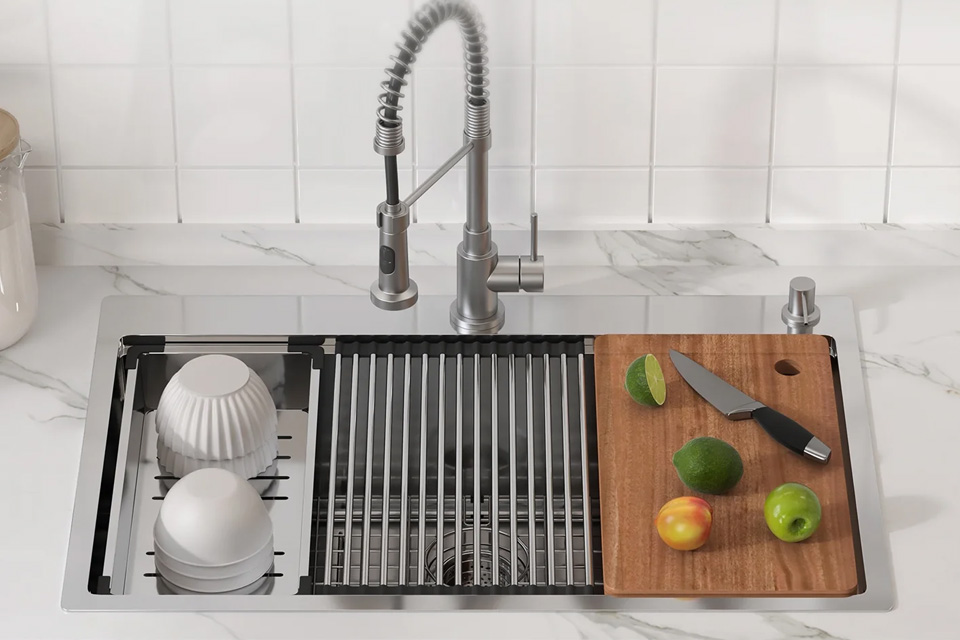
How To Clean a Stainless Steel Sink With Baking Soda and Vinegar
Baking soda lifts grime; vinegar breaks mineral film. Use them in sequence, not as a mixed slurry:
- Sprinkle baking soda on a damp surface and gently scrub.
- Rinse.
- Mist vinegar on remaining spots, quick dwell, wipe, rinse, and dry. Working with the grain keeps the linear brush lines looking clean, not swirly.
Deep Cleaning a Stainless Steel Sink
When regular care isn’t enough:
- Mask off nearby stone if needed.
- Wet the sink, apply a stainless-safe oxalic cleanser.
- Light pressure, always with the grain.
- Rinse thoroughly—edges, corners, and drain lip.
- Dry and buff a drop of oil. This resets the finish without harsh abrasives. If you see persistent discoloration, repeat gently rather than pressing harder. Hard pressure = micro scratches.
Maintenance Tips for Busy Homes, Hotels, and Builds
- Daily: quick soap wash, rinse, towel-dry.
- Weekly: baking-soda scrub + vinegar spot-treat, rinse, dry, light oil.
- Monthly: targeted oxalic cleanser for stains, then oil.
- Tools: keep one microfiber for “wet work,” one for drying. Replace pads when worn.
- Don’t leave rubber sink mats sitting wet; lift to dry after use.
- For team ops, write a 3-step card and stick inside the cabinet. People actually follow simple cards.
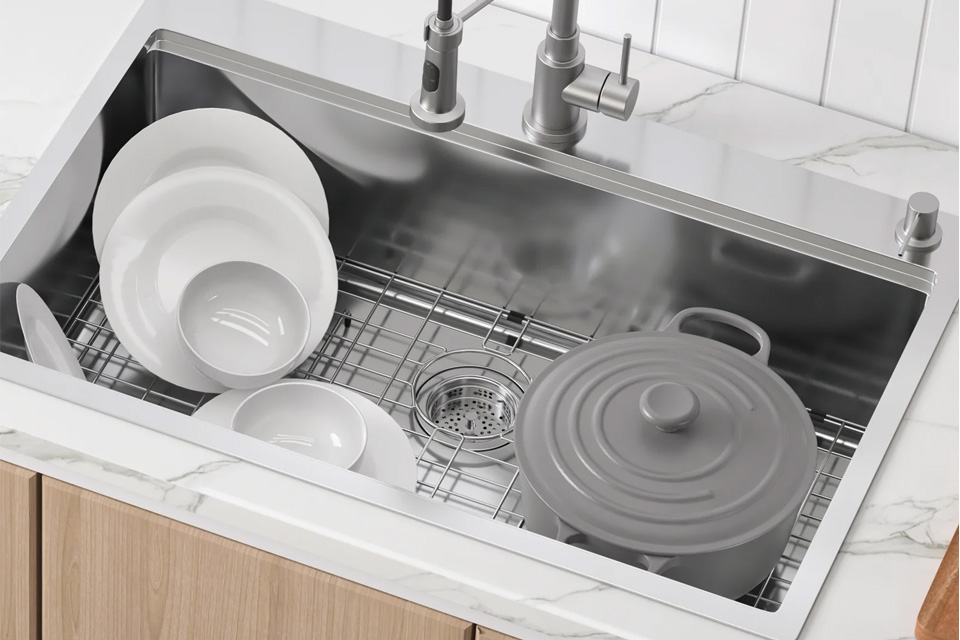
Buying Considerations That Make Cleaning Easier
If you’re sourcing sinks for new projects or retail assortment planning, cleaning performance ties back to build choices. SUSINKS supports OEM/ODM so you can spec for care and speed:
- Brushed stainless finish hides everyday marks better than mirror.
- Tighter corner radii look modern but need a slimmer non-scratch pad to reach edges.
- Integrated ledges and workstation rails add function; include a fitted drying rack to push users to “rinse + dry” by default.
- Gauge matters for feel and noise. Pair sinks with sound-deadening pads and undercoating; less “clang,” easier to wipe.
- Include a microfiber and quick-start card in the box—tiny add that cuts service calls. Little hack, works well.
Explore examples from our lineup to see finishes and forms that clean up fast:
- Top Stainless Steel Sinks Manufacturer In China
- Products
- Undermount Single Bowl 18 Gauge Stainless Steel Kitchen Sink
- Wholesale Undermount 16 Gauge Stainless Steel Bar/Prep Sink
- Nano Black 16 Gauge Stainless Steel Single Bowl Kitchen Sink
- Wholesale Quality Double Bowl Stainless Steel Kitchen Sinks
- Undermount Stainless Steel Workstation / RV Kitchen Sink
- Undermount Double Bowl Stainless Steel Kitchen Sink Factory
These links show real spec options for different usage场景—single bowl for compact kitchens, double bowl for prep/soak flows, workstation rails for heavy cooking. If you need size tweaks, branding, or packaging changes, our team handle OEM/ODM quickly with stable lead time and MOQ alignment.
Quick FAQ: Cleaning Pain Points
Why does my sink still look cloudy after cleaning? It’s usually minerals. Do a fast vinegar pass, then dry. If haze remains, a short oxalic-cleanser rub with the grain clears it.
Can I use bleach? We don’t recommend. It can damage the passive layer and discolor. Stick to mild soap, baking soda, vinegar, and stainless-safe powders.
I scrubbed hard and got tiny lines. Now what? They’re micro-scratches. Stop using harsh pads. Clean gently with the grain and buff a drop of oil; appearance will improve.
Do colored stainless (like nano black) clean the same? Yes—same gentle routine. Avoid harsh abrasives. Always test a small area first and go light on polish.
Simple SOP You Can Share With Your Team
- After each shift: soap wash, rinse, dry.
- Twice a week: baking soda scrub, vinegar spot-treat, dry, quick oil buff.
- Monthly: targeted oxalic cleanser for stains, rinse fully, dry. Keep two labeled cloths: “Wash” and “Dry.” Replace when worn. This keep the finish sharp and the sink smelling clean. It work well and fast.
SUSINKS has 30+ years building stainless solutions for retail, projects, and brand private-label. If you need a cleaning card, onboarding insert, or co-branded care guide for your packaging, we can include it in your OEM/ODM bundle—no headache, no extra chase.

Stainless Steel Sinks Manufacturer
Leading Chinese stainless steel sink maker for kitchen, bathroom, bar and RV; premium single & double bowls, OEM/ODM services for clients and brands worldwide!
Quick Links
Products
Contact
© 2025 China Kitchen Sink | Stainless Steel Sinks Manufacturer